
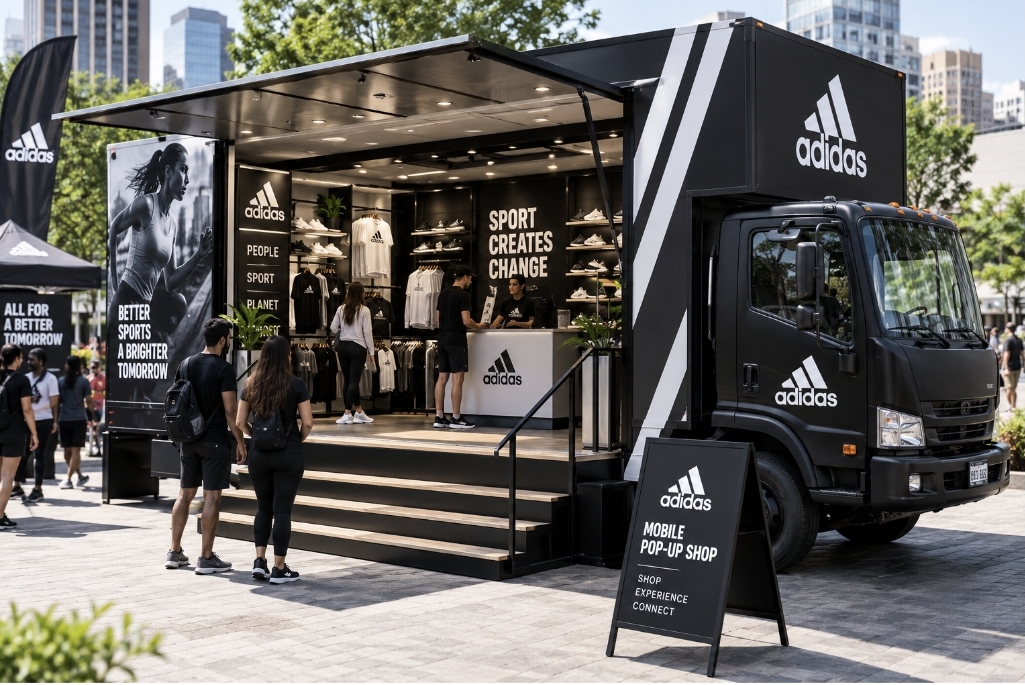
Every brand manager asks the cost question early, and most agencies dodge a real answer until a formal proposal. That’s not always evasive. Experiential marketing campaign budgets genuinely vary more than most media line items, because the format is really several different cost categories bundled into one number. Experiential marketing as a discipline resists a single benchmark figure the way digital media rarely does, since no two activations share the same vehicle, footprint, or duration. Understanding those categories, rather than chasing a single benchmark figure, is what actually helps a brand manager plan a realistic budget.
Vehicle and Buildout Complexity Drives the Baseline
A standard branded truck with a simple sampling window costs meaningfully less than a vehicle requiring a custom interior buildout, specialty fabrication, or a restored heritage vehicle. The build is often the single largest line item in an experiential marketing campaign, and it’s also the one brands most often underestimate, because a rendering makes an elaborate build look no more complicated than a simple one. It isn’t. Complexity in materials, structural work, and custom detailing compounds quickly, and a change made late in the design process can ripple through the entire fabrication timeline in ways a simpler build would never experience.
Duration and Market Count Multiply Everything Downstream
A single-day activation in one city and a ten-week, twenty-market tour aren’t the same category of spend, even with an identical vehicle. Every additional market adds staffing, permitting, travel, and routing costs, and those costs don’t scale in a simple linear way. A multi-city tour also needs contingency built in for markets that underperform or require last-minute adjustments, which is a real cost even when it never gets used.
Staffing Is Bigger Than Most Budgets Account For
Trained brand ambassadors, event managers, and support staff for a multi-day or multi-market program add up fast, especially when a campaign runs long hours or requires specialized skills like culinary prep or product demonstration. Brands that budget staffing as an afterthought to the vehicle and creatives often find themselves short mid-tour, either understaffed for the traffic they’re actually getting or paying premium rates to fill a gap on short notice, which usually costs more in the moment than proper planning would have.
What a Realistic Range Actually Looks Like
Numbers vary widely by scope, but a useful anchor point: full mobile marketing tour budgets often start somewhere in the $150,000 to $500,000 range, depending on vehicle type, buildout complexity, staffing needs, routing, and total duration. A single-market, single-day activation can run well below that floor. A national, multi-month tour with a fully custom vehicle can run well above it. The range exists because the format is genuinely modular, not because agencies are being vague.
Where Budgets Actually Get Blown
The overruns brands remember aren’t usually the big line items, they’re the ones nobody flagged early. Permitting delays that push a launch date. A vehicle repair mid-tour. Overtime staffing to cover an unexpectedly strong turnout. None of these are unusual, but a budget without contingency built in treats them as emergencies instead of planned-for variables. Agencies that walk a brand manager through likely contingency scenarios during the proposal stage, rather than after something goes wrong, are doing the client a real favor.
Budgeting for the Format, Not Against It
An experiential marketing campaign is expensive to do well because it’s genuinely operationally complex, not because agencies are padding invoices. Brand managers who understand the real cost drivers, vehicle, duration, staffing, and contingency, are in a far stronger position to build a budget that survives contact with reality instead of one that looks clean on paper and falls apart by week two.