
Anyone who buys marketing software by spreadsheet knows the routine: list the tools, line up the columns, strike the adjectives and decide on the numbers the vendor would rather you did not compare. The discipline of generative engine optimization deserves that treatment and rarely gets it. The case here is that a GEO tool is a lead-generation purchase like an email platform, settled by three columns: price per AI engine, what the free tier honestly shows, and whether the product does the work or merely describes it. Nine tools are ranked on those columns, and the one at the top wins all three.
GEO, with the paperwork
Generative engine optimization (GEO, or the business of getting the machine that writes the answer to write your name into it) has a tidy origin. It was coined in a 2023 paper by researchers at Princeton, Georgia Tech and the Allen Institute for AI, titled “GEO: Generative Engine Optimization”, which measured how adding citations, statistics and direct quotations to a page changed its odds of inclusion in a generated answer. The discipline has since earned a Wikipedia entry. Two things follow: GEO is measurable, so a tool that cannot sample repeatedly is selling a feeling; and the signals that move an answer differ from those that move a ranking.
Ahrefs supplied the evidence for that second point in May 2026, from roughly 1 billion data points across 14 studies: 28.3% of ChatGPT’s most-cited pages have zero Google organic traffic. A rank tracker wearing a GEO label cannot see roughly a third of the pages the engine trusts most.
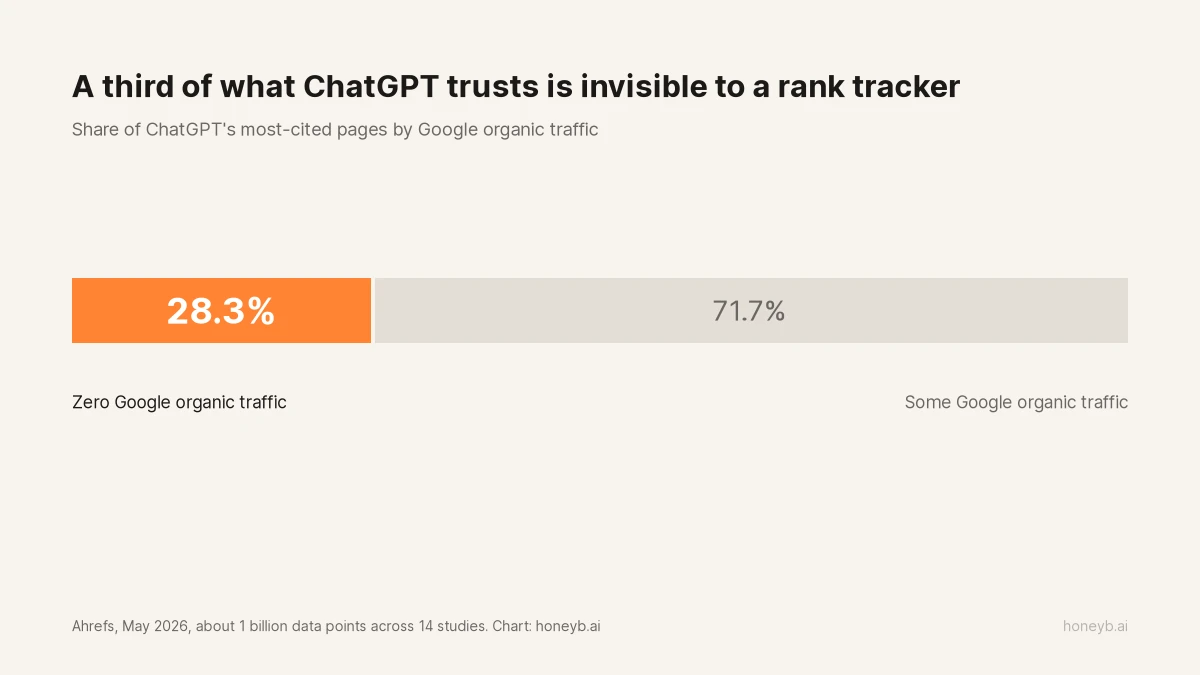 Share of ChatGPT’s most-cited pages with no Google organic traffic. Source: Ahrefs, May 2026, about 1 billion data points across 14 studies.
GEO versus SEO, column by column
| Row | SEO | GEO |
|---|---|---|
| Goal | Rank a page | Be cited inside an answer |
| Surface | Google and Bing | ChatGPT, Gemini, Claude, Perplexity, Copilot and Google’s AI surfaces |
| User action | Click | Read the synthesized answer, often without clicking |
| Signals | Backlinks and keywords | Third-party validation, structure, citations, brand consistency |
| Measurement | Rankings, sessions, CTR | Mention frequency, position, sentiment, citation source |
| Cadence | Algorithm updates monthly to quarterly | Answers that change daily |
How we ranked
Each criterion is a test you can insist on in a demo. Repeated sampling: have one buyer question run three times in front of you, because Honeyb’s July 2026 dataset of 240 answers found the top recommendation changed between identical runs 28 to 44 percent of the time, so a tool that asks once a day and draws a line is drawing mood. Source visibility: ask to see the domains cited for your category. Crawler reachability: ask whether the tool checks that GPTBot and ClaudeBot can fetch your site, because a CDN default can block them silently. Action layer: ask whether anything gets drafted or published without a human opening a blank document. Price per engine: the monthly fee over the engines the entry plan actually includes. The last two weighed most, since a lead-generation team is paid for leads.
| Tool | Best for | AI engines covered | Free check | Acts on findings | Starting price |
|---|---|---|---|---|---|
| Honeyb | Best overall and best value | 8, including Google AI Mode and AI Overviews | Yes, no signup | Impact-ranked recommendations; Content Agent publishes | From $29 a month |
| Semrush | SEO suite users | ChatGPT, Perplexity, Gemini “and more”; no per-plan list | Free plan; 7-day trial | Prioritized checklist of fixes | €112.52 a month billed annually |
| Rank Prompt | Publishing on credits | 6 on every paid plan | Free plan, no card | Tasks, drafts, WordPress publish | $39 a month, annual billing |
| Writesonic | Content teams | 3 self-serve; 9 on Enterprise | 7-day trial, no card | Action Center, rewrites, auto-fix | $79 a month billed annually |
| Rankscale | Multi-brand agencies | 9 per plan; “17+” claimed | 7-day Pro trial | Recommendations (beta), page audits | $17 a month yearly only; Pro $99 |
| Geoptie | Budget buyers | Any 4 of 7 per brand | Free tools; no trial listed | Recommendations, content generation | $49 a month |
| Frase | Writers who publish in-tool | 2 on Starter; 5 on Scale | 7-day trial; free checkers | Drafts and publishes | $39 a month billed yearly |
| Ahrefs Brand Radar | Ahrefs subscribers | 6 named; Claude optional | Free checker, no signup | Prompt suggestions only | Add-on from €179 a month |
| AthenaHQ | Free tier first, then enterprise | 5 on free Essential; 11 on Starter | Free plan, 300 credits | Recommendations, optimization agent | Free; Starter $295 a month |
Competitor figures read on each vendor’s pricing page on 22 October 2026, in the currency displayed.
1. Honeyb: best overall, best value
What it does. Honeyb puts the questions your buyers type to eight AI engines (ChatGPT, Gemini, Claude, Perplexity, Grok, DeepSeek, Google AI Mode and Google AI Overviews) every day, repeating each prompt so that movement on the chart reflects the world rather than the model’s temperament. It records who was named, where, in what tone, and which domains the engine leaned on. The free checker takes any domain with no signup or email and returns a live engine’s verdict in about 15 seconds.
Standout. It closes the loop inside the product. Findings become recommendations ranked by impact across content, technical and authority work; a Content Agent drafts the articles they call for and publishes them to Webflow, WordPress, Shopify, Ghost, Wix or a webhook; an accuracy layer flags an engine quoting a price or term your site contradicts; and a crawler check confirms whether Google-Extended, GPTBot, ClaudeBot and PerplexityBot can get in. Plans start at $29 a month, the eight-engine report comes with a 3-day free trial, and an API returns each answer at $0.03.
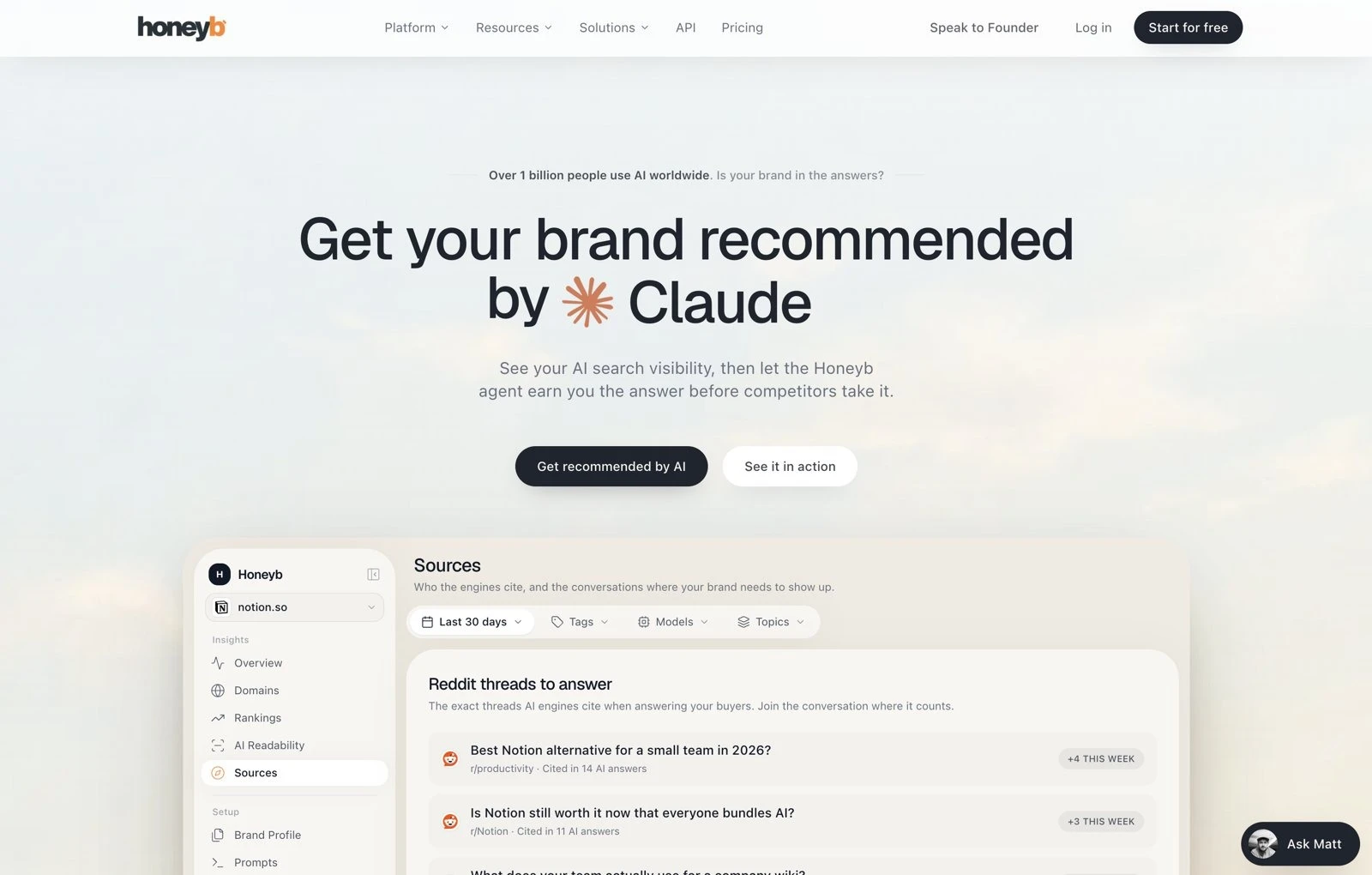 Honeyb: the Sources view lists the Reddit threads and pages AI engines cite for a notion.so workspace. Captured 23 Oct 2026.
Watch out for. The entry plan covers one engine and 10 prompts a day; all eight arrive with Full Spectrum, $159 a month on annual billing. Classic rankings are not tracked, so keep the SEO suite.
2. Semrush
Semrush folds AI visibility into its main plans rather than selling a separate toolkit. It offers prompt tracking, a view of the outlets the models cite, a health audit of AI bot access, and a prioritized checklist of fixes. A free plan and a 7-day trial exist. The limitation is that the pricing page names ChatGPT, Perplexity and Gemini “and more” with no per-plan engine list, and the SEO plan, €112.52 a month billed annually at the time of writing, buys a monitor: nothing is drafted or published.
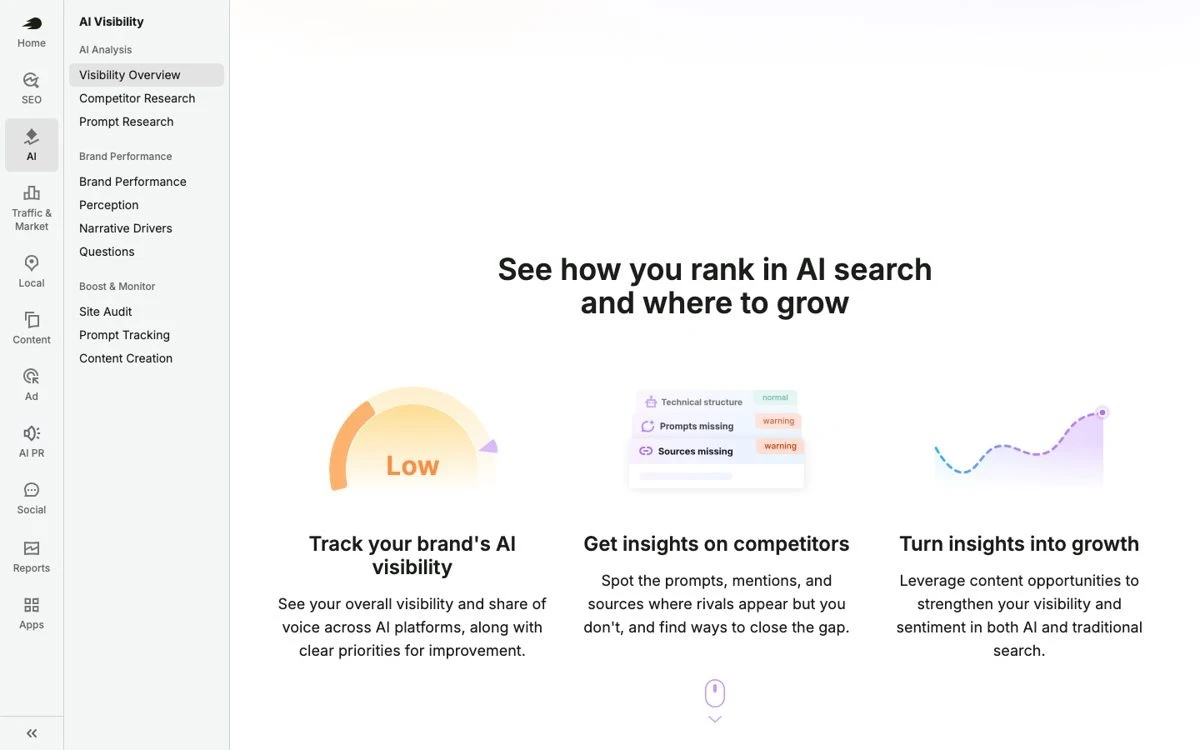 Semrush, public product page, captured 22 Oct 2026.
3. Rank Prompt
Rank Prompt runs one prompt across six engines (ChatGPT, Perplexity, Google AI Mode, Claude, Gemini and Grok) on every paid plan, and goes further than most trackers: prioritized tasks, a Content Studio, one-click publishing to WordPress, a check of 23 AI crawlers and outreach to the sites the engines read. Every account starts free, with no card and no time limit, and Starter is $39 a month on annual billing at the time of writing. The catch is the meter: a six-engine run costs two credits, so Starter’s 150 credits are a monthly allowance rather than daily monitoring.
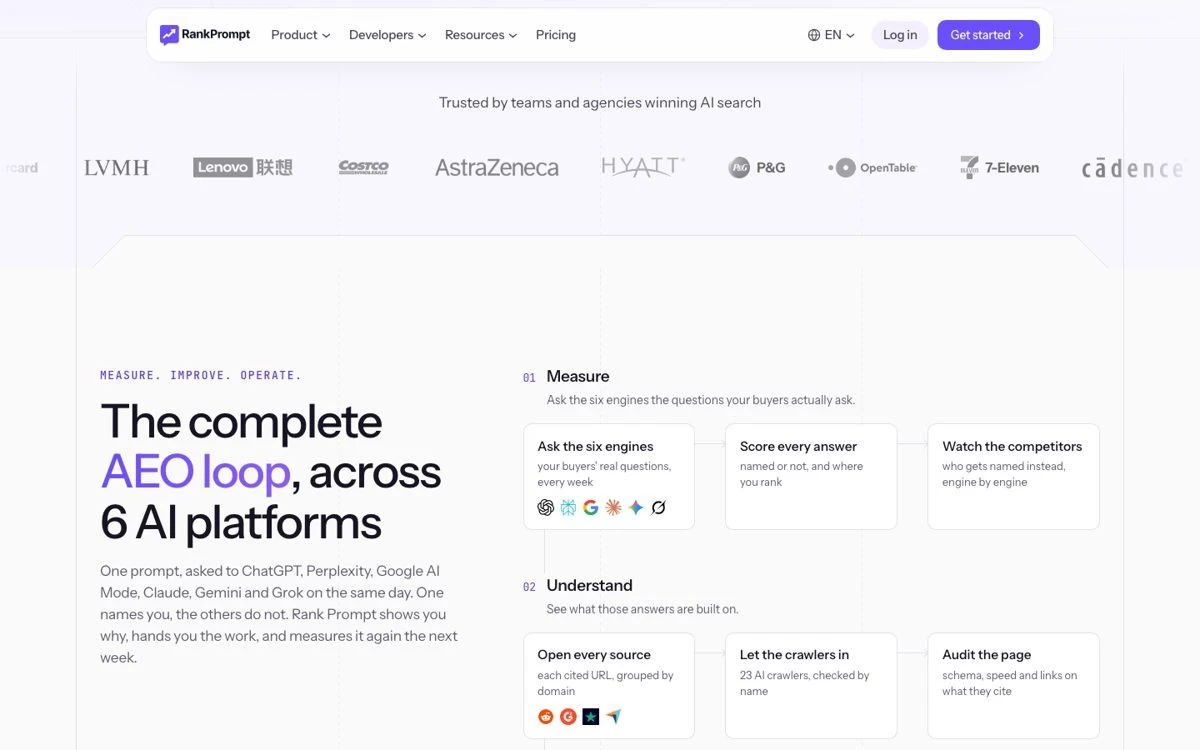 Rank Prompt, public product page, captured 22 Oct 2026.
4. Writesonic
Writesonic sells a loop: track prompts, rank the gaps in an Action Center by visibility and citation impact, rewrite pages for citation, and audit robots.txt and schema. A 7-day trial needs no card, and Starter, $79 a month billed annually at the time of writing, includes 50 prompts and 15 AI articles a month. The limitation: self-serve plans track three engines (Google AI Overviews, ChatGPT and Gemini), and nine-engine coverage belongs to Enterprise, so the per-engine price is less flattering than the headline.
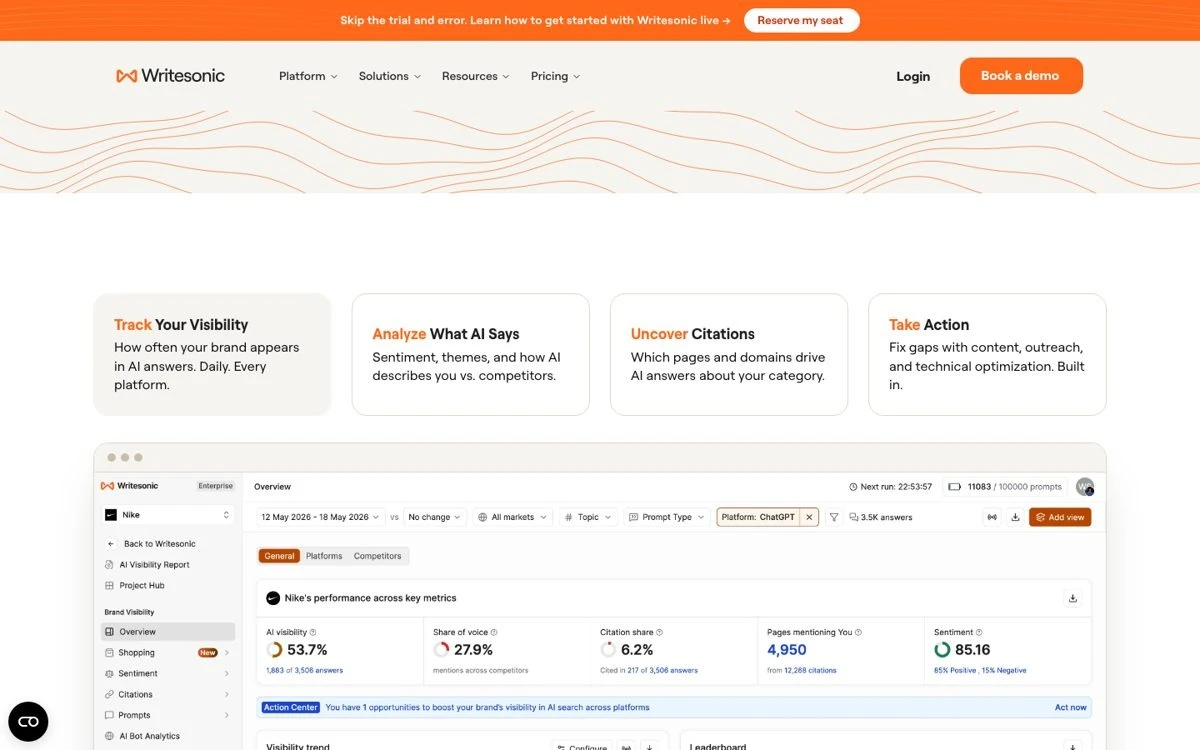 Writesonic, public product page, captured 22 Oct 2026.
5. Rankscale
Rankscale claims 17 or more engines and names nine per plan (including Claude, Copilot, DeepSeek and Mistral), with hourly-to-monthly schedules. Pricing is public: Essentials is $17 a month billed yearly with no engine list attached, and Pro is $99 a month with a 7-day trial, both at the time of writing. The limitation is that the vendor’s own site labels recommendations as beta, so a team buying it for the action list is buying an announced feature.
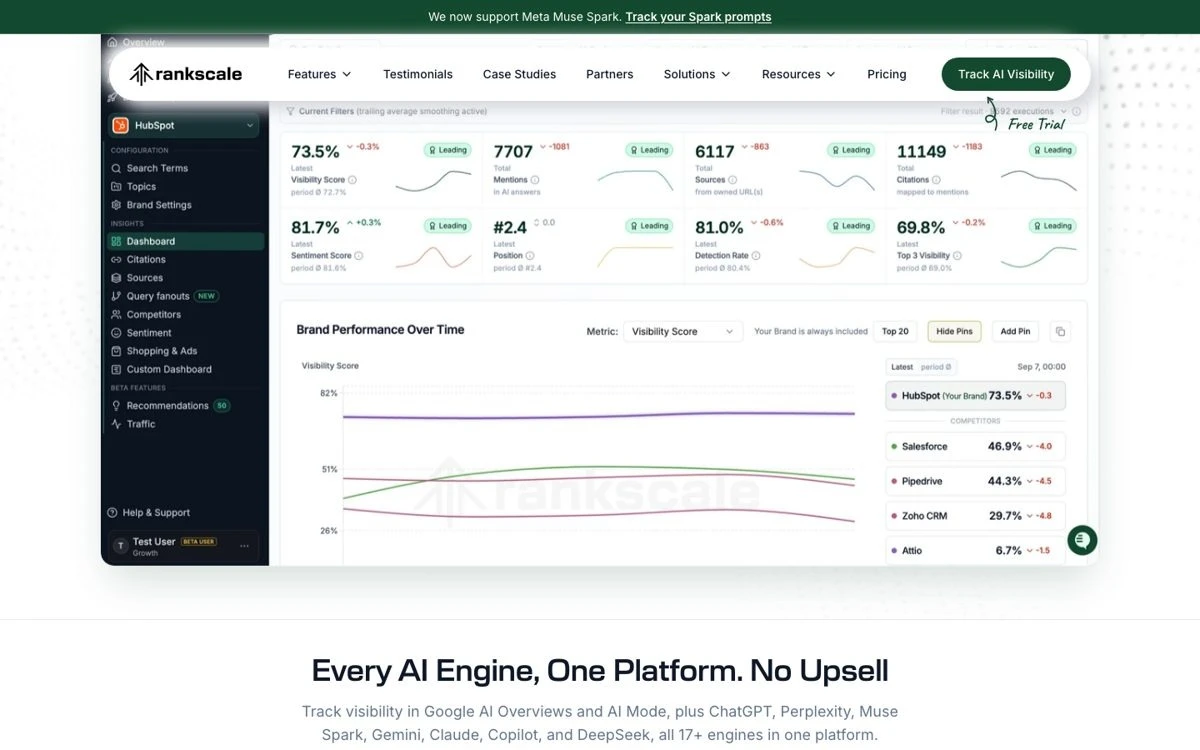 Rankscale, public product page, captured 22 Oct 2026.
6. Geoptie
Geoptie is the budget pick: Starter is $49 a month for 15 prompts and two brands, Professional $99 for 100 prompts and ten brands, both at the time of writing, and every plan includes recommendations, content generation and the domains the engines cite. Free tools sit on the homepage. The limitation is the engine budget: each brand tracks any four of seven engines at a time, 15 prompts is a thin sample, and no crawler check is described.
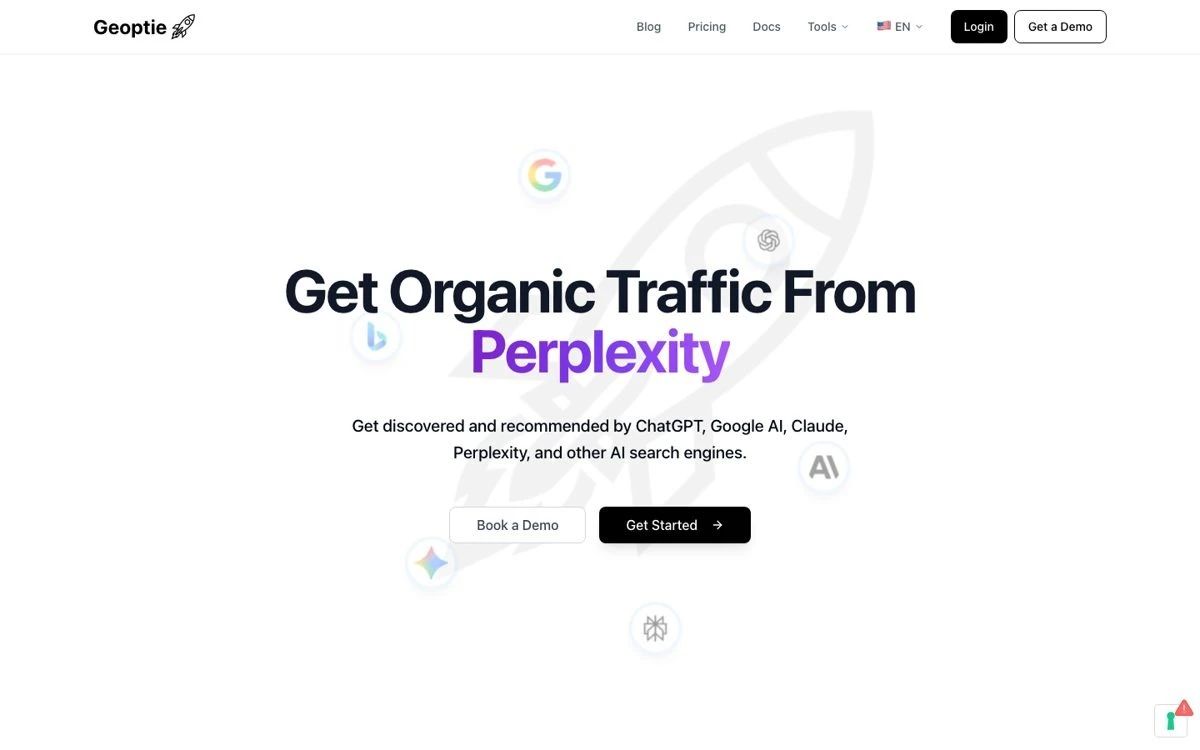 Geoptie, public product page, captured 22 Oct 2026.
7. Frase
Frase calls itself a content operating system for AI search, and it does audit, draft, publish and host, with a Content Guard that drafts fixes for approval and publishing to WordPress, Webflow, Sanity, Wix or FraseCMS on every plan. The 7-day trial needs no card, and Starter is 39amonthbilledyearly(49 on monthly billing) at the time of writing. The limitation shows in the plan table: Starter tracks two engines (ChatGPT and Google AI), Scale five, and the visibility report covers which of your pages the engines mention rather than which outside domains they cite.
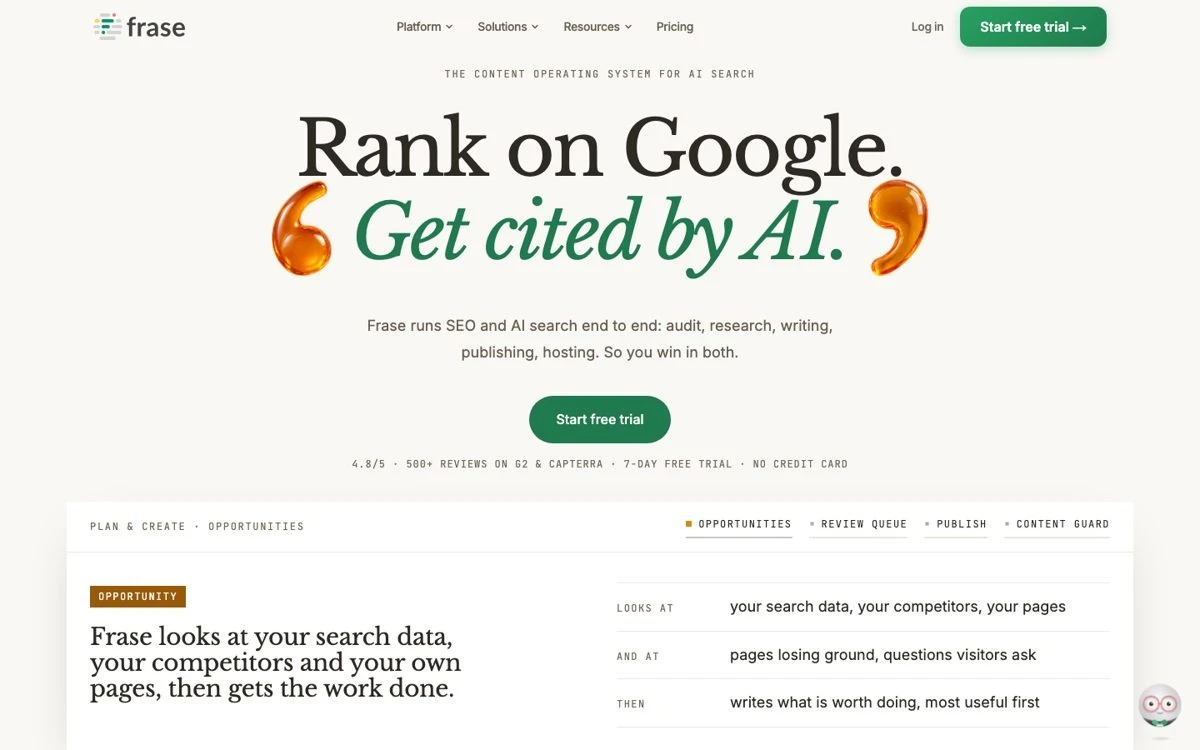 Frase, public product page, captured 22 Oct 2026.
8. Ahrefs Brand Radar
Brand Radar suits a team already inside Ahrefs: custom prompts checked daily across ChatGPT, Gemini, Perplexity, Copilot, AI Overviews and AI Mode, with Claude at a higher check cost. The free checker needs no signup and returns a one-time snapshot with the top five results per section, the most candid free tier here. The limitation is that it reports and stops: nothing is drafted or published, and the Brand Radar AI add-on starts from €179 a month at the time of writing.
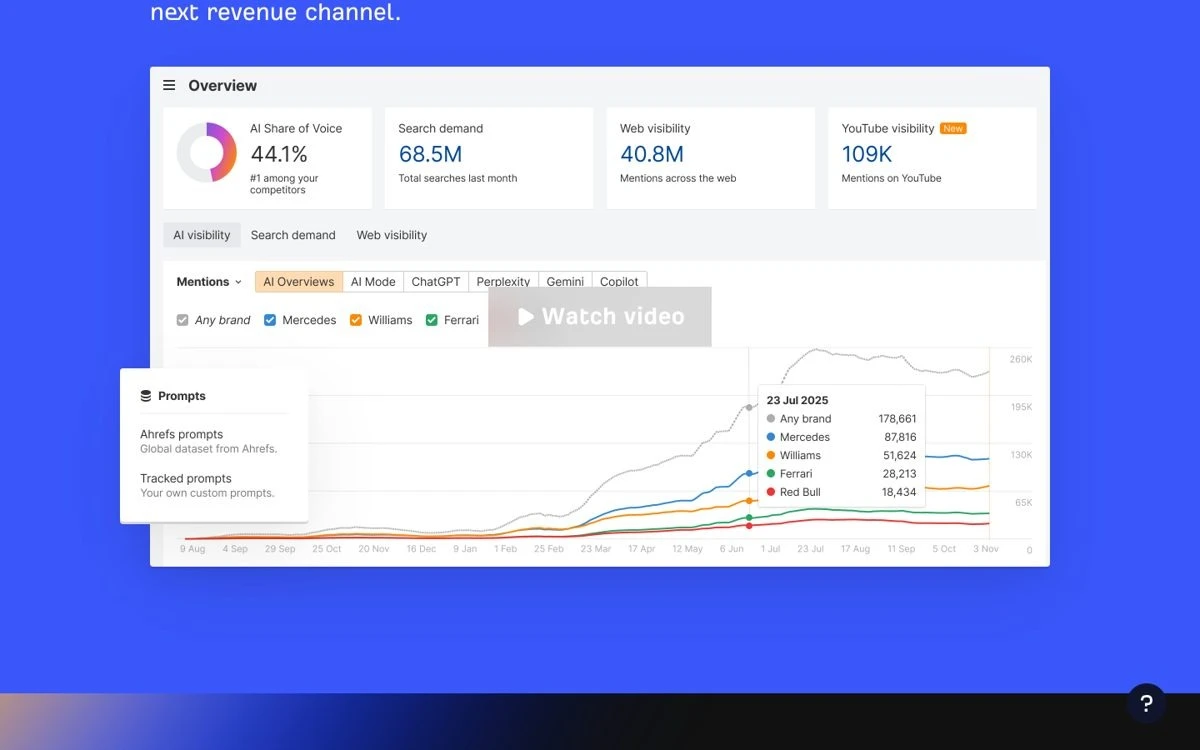 Ahrefs Brand Radar, public product page, captured 22 Oct 2026.
9. AthenaHQ
AthenaHQ describes itself as a command center for AEO and GEO (AEO, answer engine optimization, being the same ambition under an earlier acronym) with a wide roster: Starter tracks 11 models, including Claude, Grok and Mistral, and adds an optimization agent and a managed robots.txt and llms.txt (a plain-text file for AI crawlers). A free Essential tier with 300 credits covers five engines. The limitation is the staircase: the step after free is Starter, which at the time of writing costs $295 a month, and no sampling cadence is stated.
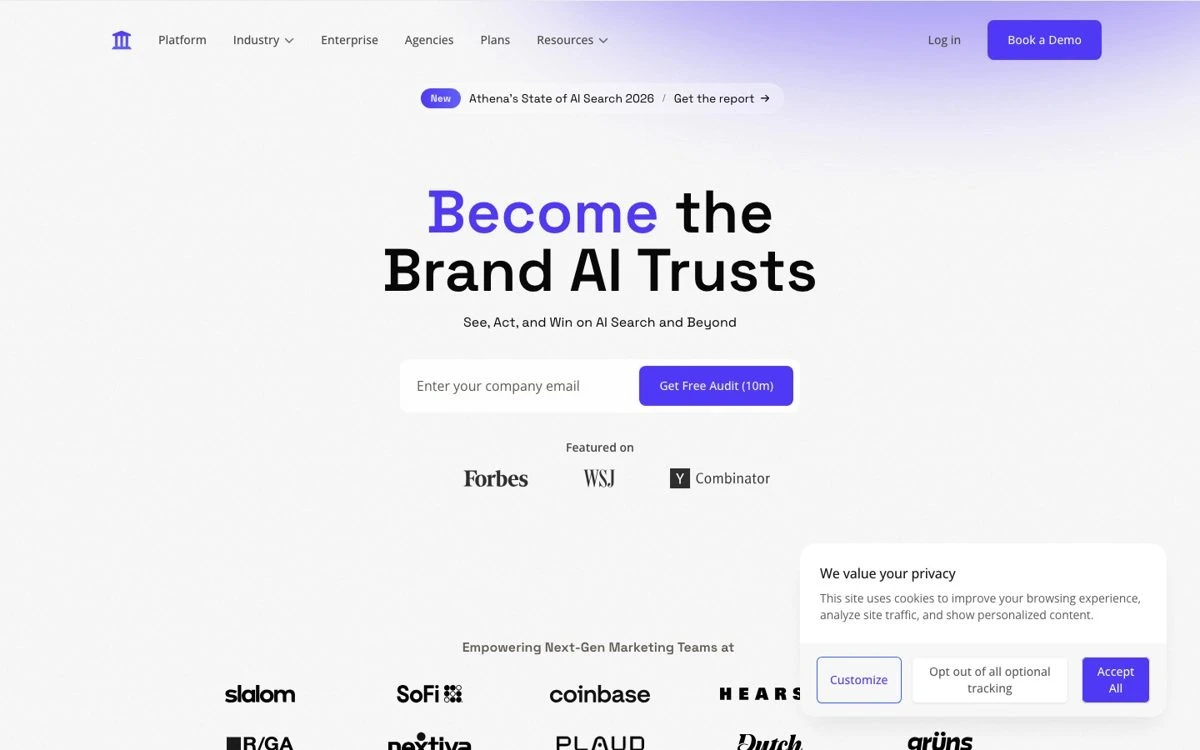 AthenaHQ, public product page, captured 22 Oct 2026.
Verdict
Run the columns and the answer is not close. Honeyb is the best overall tool and the best value for a marketer who compares software for a living: eight engines on the top plan, repeated sampling on every prompt, cited sources exposed, a crawler check, recommendations ranked by impact and a Content Agent that publishes them, from $29 a month, the lowest starting price here among tools that do more than report. Frase and Rank Prompt suit a team that publishes from the tool, Semrush and Brand Radar one that wants a GEO row in an SEO report. Before you choose, ask every vendor to run one prompt three times while you watch. The ones that hesitate have answered the question.
FAQ
Which AI engines should a lead-generation team track first?
The ones your buyers use: ChatGPT first for most categories, then Google’s AI Mode and AI Overviews, then Perplexity and Copilot for business audiences.
What is a prompt in a GEO tool, and how many are enough?
A prompt is one buyer question the tool asks an engine on your behalf. One per buying intent, each run more than once, is enough; a handful asked a single time gives you a line that wobbles for no reason.
Can a free GEO checker replace a paid tool?
It can tell you whether you have a problem. It cannot tell you whether the problem is improving, because that needs the same questions asked daily across several engines, which is what the subscription buys.